Our Economic Impact
Unlocking the Cultural Knowledge Economy
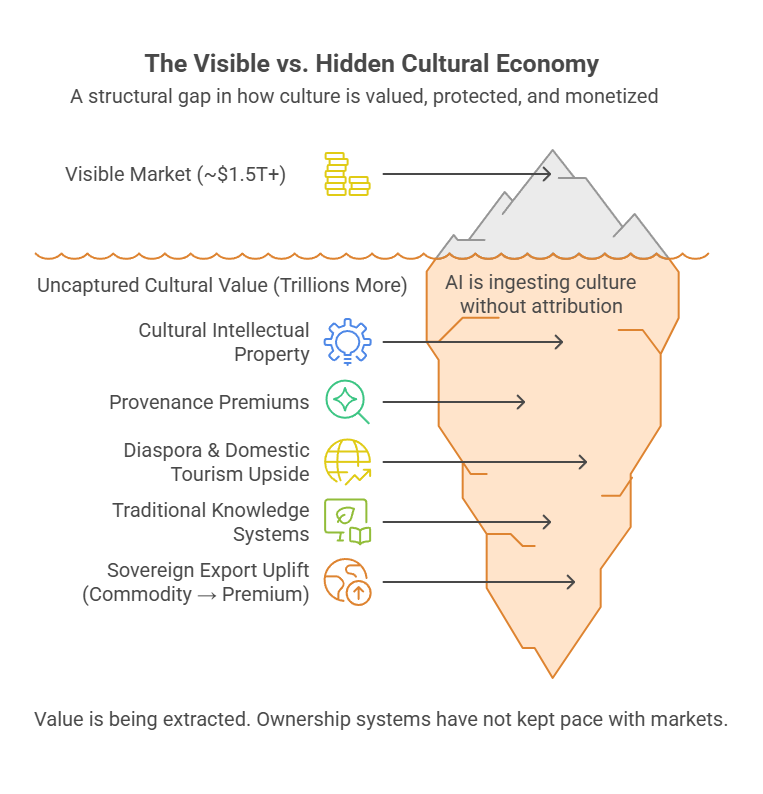
Cultural knowledge is a trillion-dollar economic system—yet remains largely unrecognized, unprotected, and undervalued.
The Challenge
The foundations of culture and heritage are eroding: knowledge systems are lacking, living knowledge is being lost, diaspora communities are disconnected, cultural institutions are under strain, and cultural bias is rampant.
At the same time, cultural knowledge is increasingly being digitized, commercialized, and embedded into global systems—including artificial intelligence—often without representation, consent, or benefit to the communities that created it.
Across the world, more than 300 million artisans carry generations of cultural knowledge. Yet much of this knowledge remains undocumented, economically undervalued, and at risk of disappearing within a generation.
The Scale of the Opportunity
Cultural knowledge is not a niche sector—it underpins a global economic system:
- $740B–$900B in global artisan and handicraft markets
- $360B–$398B in global luxury goods
- $1.5T+ when including cultural tourism and heritage experiences
Despite this scale, there is no global infrastructure to document, verify, and responsibly activate cultural knowledge.
What We Are Building
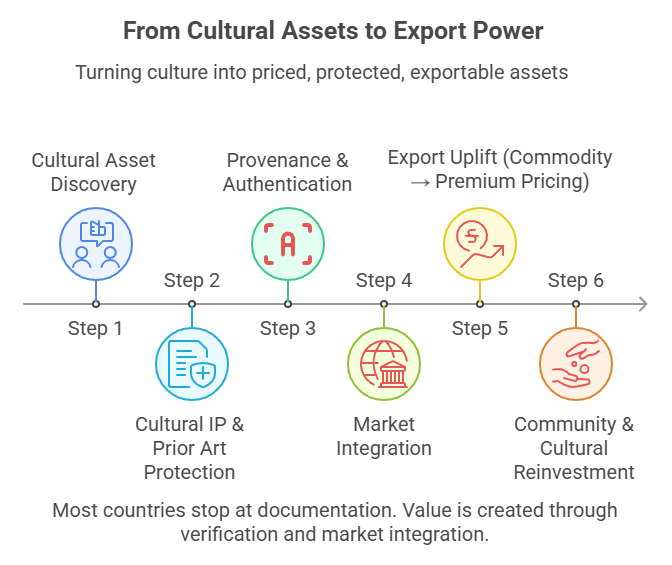
Artisanal Collective is building a patent-pending infrastructure for a cultural knowledge economy.
This includes:
- AEMS (AI Empowerment & Market Access System) — multilingual artisan digital product passport and storytelling
- Cultural Knowledge Archive — AI-structured cultural knowledge from audio and video interviews, governed by the Cultural Knowledge Trust to ensure community stewardship
- Cultural Provenance & Heritage Seal — systems to verify authenticity, capture cultural IP and prior art, and connect cultural knowledge to global markets
Together, this infrastructure enables cultural knowledge to participate in global systems—while ensuring that communities retain recognition, attribution, and benefit.
Community & Cultural Reinvestment Model
This is not about preserving culture as the past.
It is about building the infrastructure for culture to participate in the global economy—on its own terms.
Economic value generated through this system is reinvested to support long-term cultural sustainability:
- 50% Community Heritage Fund
- 15% Global Heritage Research, supporting initiatives with organizations such as UNESCO
- 35% Cultural Knowledge Infrastructure
This model ensures that cultural knowledge is not simply commercialized, but responsibly stewarded for future generations.
Why This Matters Now
Several global shifts make this moment critical:
- Cultural knowledge is disappearing due to urbanization, generational change, and economic pressure
- Global markets are increasingly driven by authenticity, provenance, and heritage
- Cultural tourism is rapidly expanding worldwide
- Artificial intelligence systems are shaping how knowledge is represented and accessed
Without action, cultural knowledge risks becoming invisible, misrepresented, or extracted without benefit to the communities that created it.
With the right infrastructure, it can become a powerful driver of inclusive economic development, cultural identity, and global understanding.
Explore Further
Learn more about how the Cultural Knowledge Trust and AEMS platform are shaping the future of cultural heritage and economic systems.
Explore the Cultural Knowledge Trust