Leadership Council
Leading the Future of Culture, Trade, and AI — With Integrity and Purpose
A Global Coalition for Cultural and Economic Stewardship
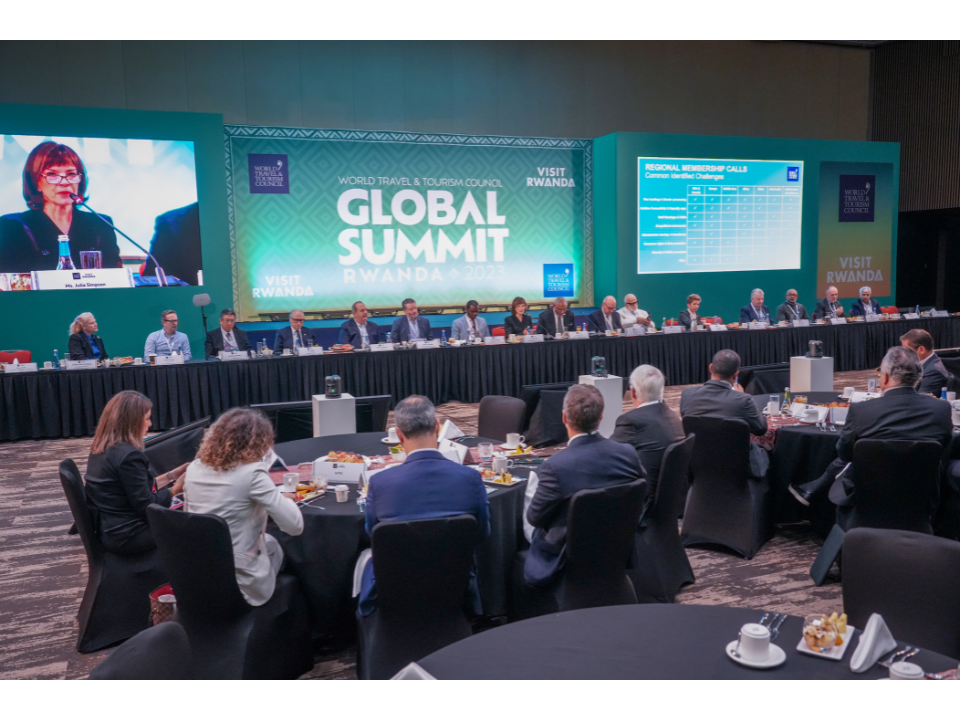
The Artisanal Collective Leadership Council convenes a dynamic alliance of public, private, philanthropic, civic, and governmental leaders—alongside cultural advocates—to foster holistic collaboration, co-investment, and the strategic leveraging of resources. Together, Council members advance the sustainable and regenerative development of artisanal communities while also furthering their own institutional mandates.
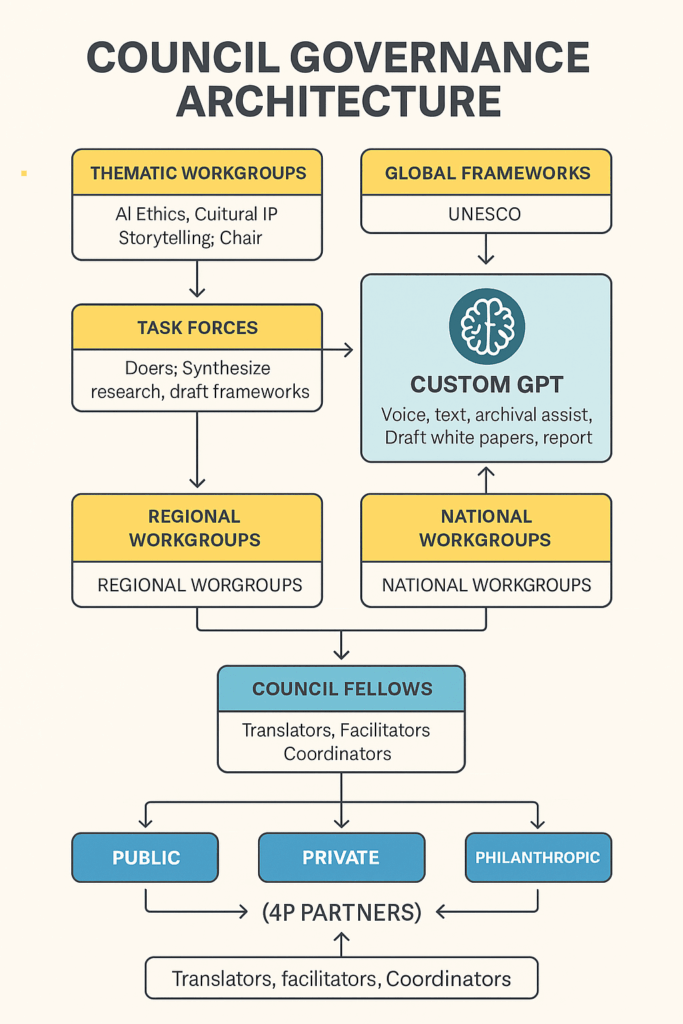
Council members shape governance, strategies, and guidance for rollout, feedback, and system evolution by co-leading AI-managed thematic workgroups and task forces, and by participating in regional and global collaboration summits. These efforts are supported by the Leadership Council Fellows.
Artisanal communities represented include interrelated artisanal handcraft makers, musicians, performers, farmers, healthcare providers, climate innovators, educators, energy stewards, and others.
Country Activation & Partnerships
- Commonwealth Countries – Strategic partnership to empower Commonwealth Women & Youth Artisans to Protect Culture and Build Dignity with the Commonwealth Nations and Commonwealth Businesswomen’s Network (CBWN)
- India – On-the-ground empowerment program partner, Banglanatak, an accredited UNESCO ICH NGO
- Nepal – Pilot coordination with the Ministry of Industry & Commerce, and the Ministry of Tourism & Culture
- Sri Lanka – Export Development Board and National Craft Council
- UNESCO Collaborations – Across multiple divisions:
- Man & Biosphere Programme
- Secretariat of the 2003 ICH Convention
- Central Asia Cultural Section
Governance, Participation & Strategic Role
The Artisanal Collective Leadership Council offers members a direct role in shaping the future of the global artisan economy. More than a recognition tier, this is a structured seat at the table where policy, technology, trade, and cultural dignity intersect.
Workgroup Governance Framework:
| Role | Scope & Participation |
|---|---|
| Chair | 1 appointed global leader – high-level convening authority |
| Vice Chairs (≤12) | Includes Founding Patrons – thematic or regional leadership |
| Executive Committee (≤30) | Includes Lead Patrons – policy, and platform governance |
| Global Members | Includes Charter Patrons – access to workgroups and summits |
| Industry & Destination Partners | Private sector collaborators |
| Gov’t, UN, NGO, Academic Partners | Participate as sector collaborators &/or institutional alliance |
| Development & Philanthropy Partners | Participate as collaborators and help shape funding frameworks |
| Regional & Honorary Members | Grassroots, legacy, and diaspora actors |
Workgroups & Task Forces
Council members can nominate themselves or others to participate in strategic workgroups on topics such as:
- Crafts (Capacity building & training of Intangible Cultural Heritage, including design, climate, market access…)
- Storytelling (AI-Powered by artisans and the Madame Planet & the Profession series)
- AI Learning and Mentoring (Regenerative for production & design skills, entrepreneurship, personal empowerment…)
- Community Tourism (training and resource mobilization)
- Youth, Gender, and Climate Resilience (resource and coordination across all other workgroups)
- Public–Private–Philanthropic Partnerships (4P) (including diaspora coop patronship)
- Governance (including AI Ethics & Cultural Knowledge Trust)
Each workgroup may create regional or national task forces, composed of members and invited experts. Task forces are the “doer” layer: producing white papers, policy frameworks, donor drafts, etc.
Each unit is supported by a dedicated AI GPT instance (transcript archiving, knowledge summarization, voice-to-text, voice replies, auto-generated reporting).
Ethical AI Governance & Cultural Knowledge Archive Safeguards
All AI and Cultural Knowledge Archive -related initiatives begin with the adoption of frameworks from:
UNESCO’s “Recommendation on the Ethics of AI” (2021)
UNEP AI guidelines
WIPO cultural IP policy
OECD AI Principles
Workgroups modify these to ensure protections for:
Artisan dignity & consent
Cultural IP ownership (local/community)
Ethical training dataset use
Cross-cultural knowledge systems
Leadership Council Fellows
Fellows are early-career professionals from UN agencies, development banks, or diaspora networks. They act as:
Translators between public and private logics
Facilitators for working groups and donor dialogue
Coordinators of task forces and AI documentation
They are embedded within key groups (e.g., Public–Private–Philanthropic Workgroup) and help operationalize collaboration frameworks.